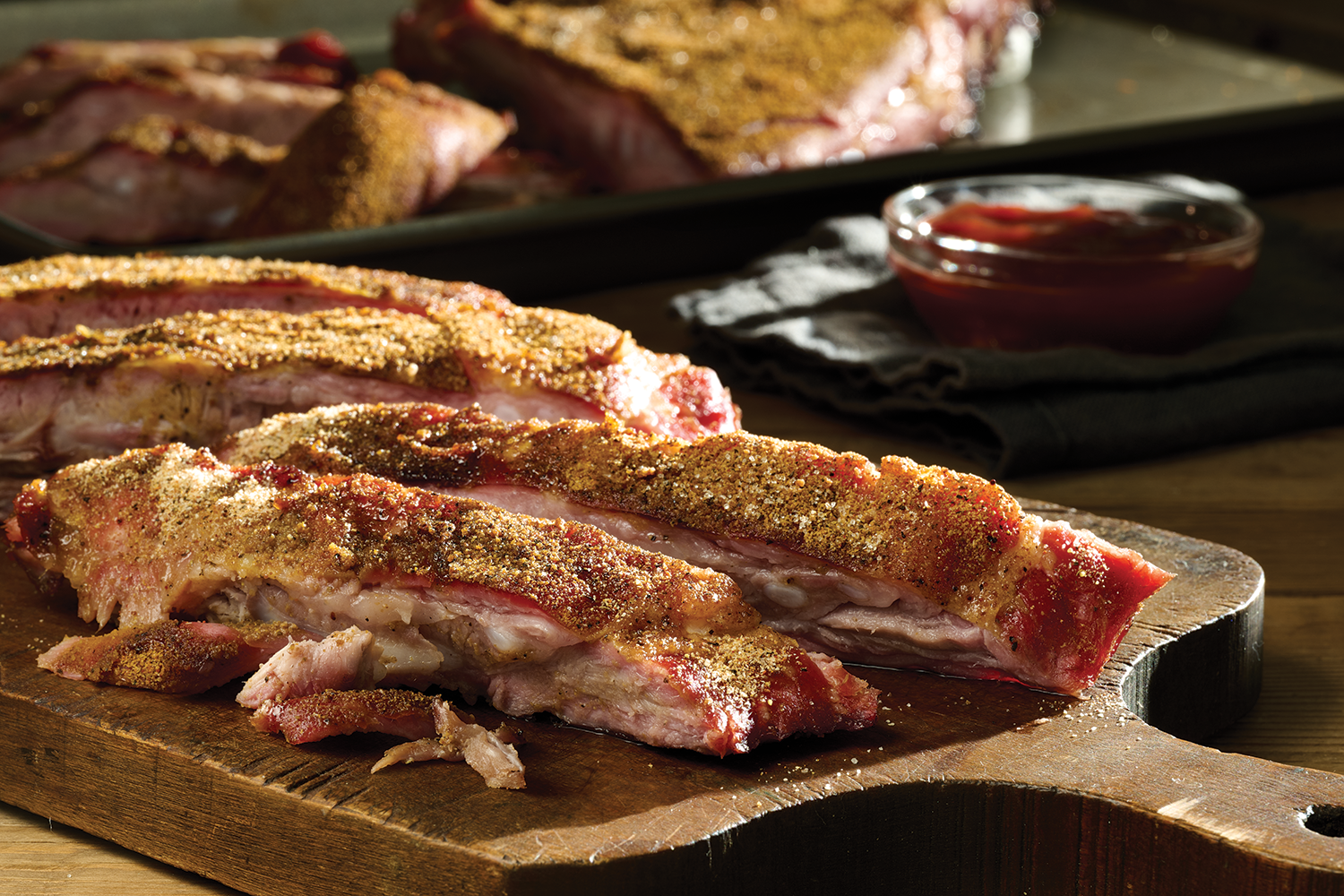
Backyard Baby Back Ribs
Kick off grilling season with Backyard Baby Back Ribs! A coating made of Member’s Mark™ Granulated Garlic, Granulated Onion, and Fine Ground Black Pepper works in harmony to enhance, not overpower, the indulgent taste of the ribs. Your backyard is going to smell amazing this summer!
Tips for Removing the Membrane from Ribs
Removing the membrane from pork ribs makes them more tender and helps seasoning and smoke penetrate better. Here are the easiest ways to do it:
- Flip the ribs bone-side up
The membrane is the thin, shiny layer covering the bones. - Loosen one corner first
Use:
- A butter knife
- Spoon handle
- Your fingers
Slide it gently under the membrane over one of the middle bones to lift a flap.
- Grab it with a paper towel
The membrane is slippery. A dry paper towel gives you grip so you can pull steadily. - Pull slowly at an angle
Instead of yanking straight up, pull:
- Slowly
- Sideways/diagonally
- In one smooth motion if possible
Often the whole sheet comes off at once.
- If it tears, don’t worry
Just repeat the process on the remaining section.
Extra tricks:
- Cold ribs are easier to work with than room temp ribs.
- If the membrane is stubborn, score it lightly between bones first.
- Some store-bought ribs already have it removed — check before starting.
Signs you found the right layer:
- It looks thin, glossy, and slightly opaque.
- Once removed, the bones and meat surface underneath look more matte and textured.
Tips for Smoking Ribs if You Don’t Have a Big Green Egg
The key is indirect heat:
- Heat source on one side
- Ribs on the opposite side
- Lid closed to trap smoke and maintain low temperature
Aim for:
- 225–275°F
- Low and slow cooking
- Thin blue smoke instead of thick white smoke
If using a charcoal grill
Tips:
- Use the “snake method” or bank coals to one side
- Add wood chunks like:
- Apple
- Hickory
- Cherry
- Pecan
- Put a small water pan under the ribs for moisture and temperature stability
- Keep vents partially open and adjust slowly
Avoid:
- Too many wood chips at once
- Constant lid opening (you lose heat and smoke)
If using a gas grill
Tips:
- Turn on only one burner
- Put ribs over the unlit side
- Use:
- A smoker box
- Or foil packet with holes punched in it filled with wood chips
- Keep temps steady around 250°F
Gas grills usually need:
- More wood replenishment
- More temperature monitoring
Timing guide
Baby back ribs:
- About 4–5 hours
Spare ribs:
- About 5–6 hours
Many people use the “3-2-1” method for spare ribs:
- 3 hours smoked unwrapped
- 2 hours wrapped in foil
- 1 hour unwrapped with sauce
For baby backs, a lighter version often works better:
- 2-2-1 or 2-1-1
How to know they’re done
Look for:
- Meat pulling back from bone ends
- Flexible “bend test”
- Toothpick slides in easily
- Internal temp around 195–205°F
One of the biggest mistakes is over-smoking:
- A little wood goes a long way
- You want balanced smoke flavor, not bitter ash taste
Backyard Baby Back Ribs
Ingredients
- 1½ tbsp Coconut sugar
- 1 tbsp Member’s Mark™ Granulated Garlic
- 1 tbsp Member’s Mark™ Granulated Onion
- 1 tbsp Member’s Mark™ Fine Ground Black Pepper
- 2 full racks Baby back pork ribs

Instructions
- Preheat oven to 250℉, or if you're smoking them on a Big Green Egg, bring the temperature to 275ºF.
- In a small bowl, combine the sugar and seasonings.
- Slide a knife under the edge of the membrane on the ribs and pry off enough until you can grab it. Holding the membrane with a paper towel, pull it off the rib rack.
- Place the ribs on a foil-lined baking pan, meaty side down.
- Coat the bone side lightly with seasoning mixture, being sure to pat the seasoning in. Then flip the ribs over and liberally coat the meaty side, being sure to season the edges as well.
- Roast the ribs for 4 hours, uncovered with the meaty side up. If smoking, wrap in foil and cook for 3-4 hours.